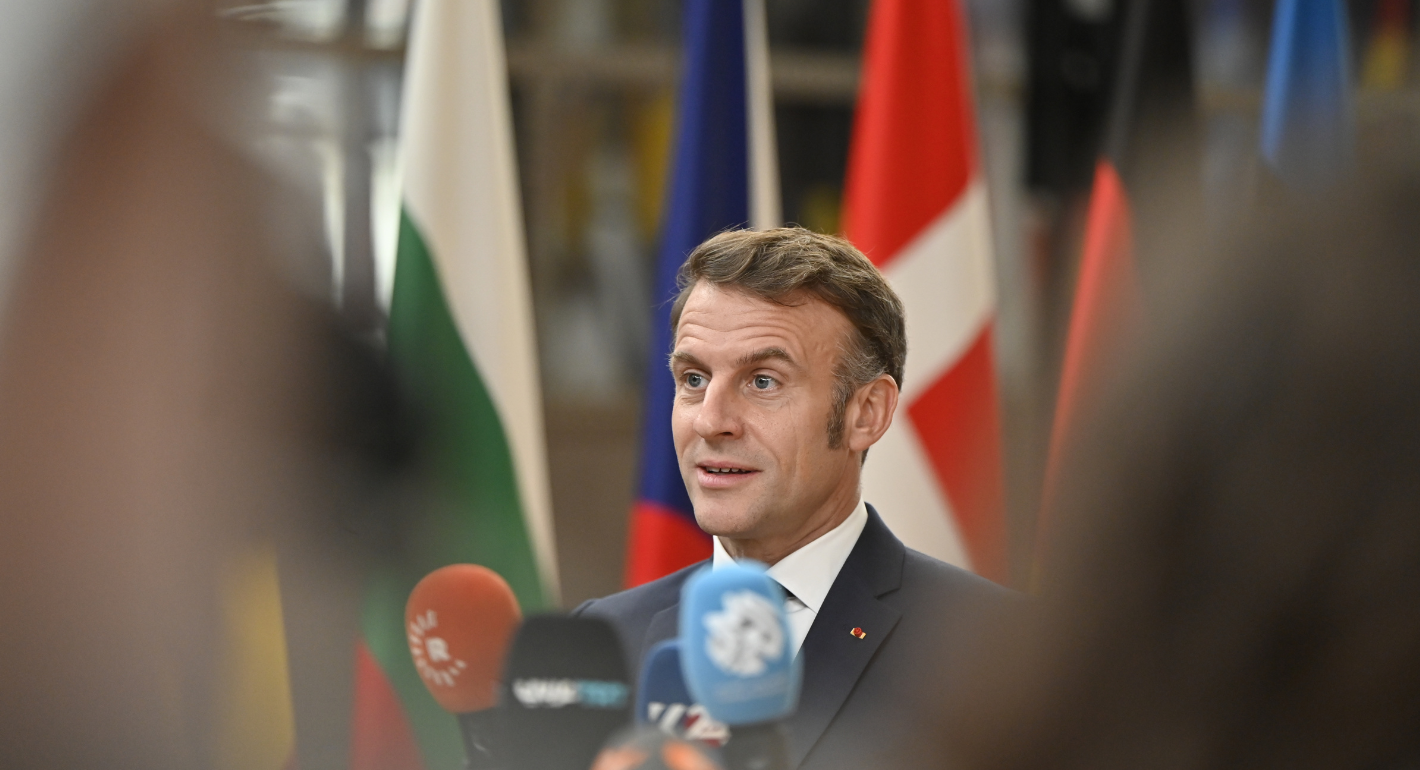
Macron's Investment Halt: New Era for France-US Trade?
In a move that has sent ripples across the transatlantic economic landscape, French President Emmanuel Macron has issued a stark warning to French companies operating in the United States. Meeting with representatives of sectors bracing for potential economic fallout, Macron called for a conditional suspension of all investment projects in the US. This directive, reportedly made in anticipation of a potential announcement from Donald Trump regarding a "massive increase in tariffs against the European Union," signals a potential turning point in France-US relations and global trade dynamics. While the full implications remain to be seen, this pre-emptive stance from Paris raises critical questions about the future of Franco-American economic ties, a relationship historically characterized by both profound alliance and occasional discord.
The announcement underscores the intricate dance between diplomacy, economic interests, and national sovereignty that has long defined the relationship between these two influential nations. From the foundational support France offered during the American Revolutionary War to modern cooperation on counterterrorism and climate change, France-US relations have navigated periods of close collaboration alongside moments of significant disagreement. Macron's latest strategic move serves as a vivid reminder of this complex legacy, potentially ushering in a new, more contentious chapter in bilateral trade.
A Deep-Rooted History of Alliance and Discord
To understand the gravity of Macron's call, it's essential to contextualize it within the rich tapestry of france us relations. The bond between France and the United States dates back to 1778, when the Kingdom of France became the first country to formally recognize and establish diplomatic ties with the nascent American republic. The 1778 Treaty of Alliance and the subsequent crucial aid provided by France were instrumental in securing American victory over Britain. However, this support came at a steep price, leaving France heavily indebted – a factor that significantly contributed to its own revolution and eventual transition to a republic.
While fundamentally peaceful since, this historic alliance has not been without its bumps. The Quasi-War from 1798 to 1800 saw naval hostilities, and the American combat against Vichy France during World War II (while supporting Free France) from 1942 to 1944 demonstrated moments of direct conflict. Yet, periods of cooperation have often overshadowed these tensions. The monumental Louisiana Purchase in 1803, where the US acquired 828,000 square miles from France, stands as a testament to strategic partnership and mutual benefit, enabling the young nation's westward expansion.
The 19th century also brought its challenges, notably during the American Civil War when France's military intervention in Mexico and consideration of recognizing the Confederate States of America strained ties. However, the post-Civil War era and the 20th century saw a general strengthening of the relationship, despite significant disagreements such as the sharp divergence over the Iraq War in 2003. Since 2010, relations have largely improved, focusing on shared global challenges like counterterrorism, climate change, and trade, reinforcing the idea that despite periodic friction, the two nations typically find common ground.
Macron's Bold Move: The Catalyst for Change
President Macron's recent directive represents a significant escalation in the ongoing transatlantic trade tensions. His call for French companies to suspend investment projects is not merely a symbolic gesture; it's a strategic gambit designed to preemptively protect French economic interests and exert pressure on potential US tariff policies. The timing, reportedly in response to an anticipated announcement by Donald Trump, highlights the acute sensitivity of global trade to political rhetoric and policy shifts, especially with an eye on upcoming US elections.
The Immediate Economic Ramifications
Should French companies heed this call and implement a widespread investment freeze, the economic ramifications could be substantial. French direct investment in the US is considerable, contributing to job creation, innovation, and economic growth in various American states. A halt would:
- Impact Job Creation: Suspending new projects could mean fewer jobs created or even job losses if existing operations scale back.
- Stifle Innovation: Cross-border investments often fuel research and development, bringing new technologies and practices to market. A freeze could slow this exchange.
- Disrupt Supply Chains: Many French companies are integrated into American supply chains, and a halt could create uncertainty and force re-evaluation.
- Signal European Disunity: While intended to protect French interests, such a move could also be seen as a challenge to broader EU cohesion if not coordinated effectively with Brussels.
For French companies themselves, pausing investment carries its own risks, including missed opportunities, loss of market share to competitors, and potential damage to long-term strategic plans. Macron's move places these businesses in a difficult position, balancing national economic policy with their own commercial imperatives.
Political Calculations and Diplomatic Leverage
Beyond economics, Macron's warning is a clear political statement. It signals France's resolve to defend its interests and potentially those of the broader European Union against what it perceives as protectionist trade policies. This strategy could be seen as:
- Pre-emptive Defense: An attempt to mitigate the damage of potential tariffs before they are even implemented, encouraging a re-thinking of policy.
- Leverage in Negotiations: A strong negotiating tactic, signaling to Washington that aggressive trade measures will be met with firm retaliation.
- Leadership within the EU: Positioning France as a strong advocate for European economic sovereignty and collective defense against external trade threats.
This bold stance will undoubtedly reshape the diplomatic dialogue between Paris and Washington, compelling both sides to carefully consider their next moves in the delicate balance of Franco-American relations.
Navigating the New Landscape of France-US Trade
The potential investment halt, triggered by the threat of increased US tariffs, highlights a significant shift in global trade dynamics. Businesses and policymakers alike must now adapt to a landscape where geopolitical tensions increasingly dictate economic decisions. For businesses reliant on the stability of france us relations, this means a renewed focus on resilience and diversification.
Strategic Considerations for Businesses
In this evolving environment, companies with significant transatlantic operations should consider several strategic actions:
- Scenario Planning: Develop robust contingency plans for various tariff and investment scenarios, including worst-case outcomes.
- Supply Chain Diversification: Reduce reliance on single markets or routes by exploring alternative suppliers, manufacturing locations, and distribution channels.
- Stakeholder Engagement: Maintain open lines of communication with government officials in both France and the US, as well as industry associations, to stay informed and advocate for favorable policies.
- Legal and Regulatory Review: Proactively assess the legal and regulatory implications of potential policy changes, particularly concerning trade agreements, investment treaties, and customs duties.
- Innovation and Efficiency: Invest in technologies and processes that can reduce costs and improve efficiency, making operations more resilient to external shocks.
Beyond Tariffs: The Broader Implications for France-US Relations
While tariffs and investments dominate the immediate headlines, the ripple effects of Macron's directive could extend to other areas of france us relations. Shared interests in counterterrorism, climate change, and global stability might face new pressures if economic disputes escalate. Diplomacy will be key to managing these potential strains. Both nations have a vested interest in maintaining a strong relationship, not just for bilateral trade but for their collective influence on the world stage. The challenge lies in finding a path forward that addresses economic grievances without undermining decades of strategic partnership.
Looking Ahead: What Defines the Future of France-US Relations?
The path forward for france us relations, especially in the economic sphere, appears increasingly complex. The historical resilience of the relationship suggests that even significant disagreements can be overcome, as evidenced by the improvement in ties post-Iraq War. However, the nature of modern trade disputes, often intertwined with nationalistic sentiments and electoral politics, presents unique challenges.
One potential outcome is a period of intense negotiation, where both sides seek concessions to avoid a full-blown trade war. Another could be a sustained period of managed tension, where cooperation continues on some fronts while economic disputes simmer. The decisive factor will likely be the willingness of leaders on both sides to prioritize long-term strategic alignment over short-term political gains.
Fact: France was the colonizing power of "New France" from 1534 until its cession in 1763, an era that laid significant groundwork for cultural and historical ties that still influence regions of the US today.
For observers, understanding the interplay of historical context, current economic realities, and political calculations will be crucial in interpreting the evolving narrative of france us relations. The enduring legacy of alliance, conflict, and commerce means that this relationship is rarely static, always adapting to new global challenges and leadership priorities.
In conclusion, President Macron's call for a conditional investment halt marks a pivotal moment in france us relations. While the ultimate fate of this "investment halt" hinges on future tariff decisions, the very act of issuing such a directive signals a new era of assertive economic diplomacy from France. It challenges the traditional framework of transatlantic trade and demands careful consideration from businesses and policymakers on both sides of the Atlantic. The coming months will reveal whether this bold move paves the way for a renewed, more balanced trade relationship, or if it ushers in a period of sustained economic tension, reshaping the contours of an alliance forged in revolution and tested by centuries of global change. The foundation of France-US Relations: A Legacy of Alliance, Conflict, and Commerce is strong, but its future direction in this new economic climate remains a compelling question.